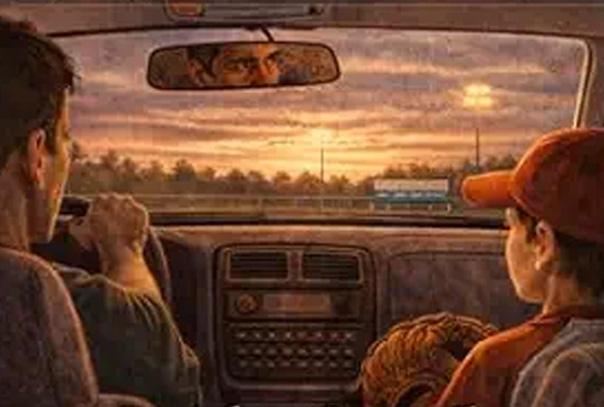
Most coaches and parents believe the game ends when the final whistle blows, the last out is recorded, or the clock hits zero. In truth, the game never really ends. It continues in parking lots, in kitchens, in bedrooms late at night. And most powerfully, it continues in the car ride home. Coaches do not always sit in that seat. They don’t hear the conversations that follow their practices and games. They don’t always see the weight their words—intended or not—can add to a child’s shoulders once they leave the field. Yet their influence travels farther than they realize, carried into the tone parents adopt, in the expectations children internalize, and in the standards that quietly become identities.
This story is not about a villainous parent or a broken family. It is about a well-meaning adult who believed continual and immediate assessment produces greatness—and a child who learned to equate love with performance. It is about how easily instruction can eclipse encouragement, and how quickly joy can be replaced by apprehension.
The primary goal of youth sports is not to train professionals. It is to mentor people. We coach people, not sports. It is the quality of the person, not the player, that is the most significant outcome. If a child leaves the game with confidence, resilience, and a sense of worth that extends beyond the scoreboard, coaches have succeeded—even if the record does not reflect it. And if a child leaves the game entirely but carries with them a love for their best effort, teamwork, and self-belief, that is the only significant win. The most important coaching may happen at the moments coaches never witness—during the drive home, when a child decides whether the game made them feel smaller or stronger.
A coach’s responsibility is to make sure the game they teach is worthy of that ride. Youth sports have never been more organized, more competitive, or more well-intentioned. Fields are lined, schedules are full, and adults show up in record numbers to coach, teach, and support. Most parents and coaches involved in youth sports are trying to do the right thing. They care deeply. They want children to succeed—not just in the game, but in life. And yet, quietly and steadily, something is being lost.
This book was written for the moments that aren’t on highlight reels. For the conversations that happen after the lights go out and the dust settles. For the car ride home. This book is for parents driving home from games, coaches who care deeply and want to get it right, former players who recognize parts of their own story, leagues and organizations seeking healthier sports cultures, and anyone who believes sports should build children up, not wear them down.
While the story is rooted in baseball, its message applies across all youth, middle school, and high school sports. This book is not an argument against accountability, discipline, or high expectations. Those things matter in sports—and in life. Instead, it is an argument for timing, tone, and emotional safety.
Baseball, by design, is a game of failure. For young athletes still learning who they are, those failures are not abstract statistics; they are emotional experiences. Children between the ages of eight and eighteen are forming their identities. They are learning how to interpret disappointment, how to measure effort, and how to understand their worth in the eyes of the adults they trust most. What they hear during those moments matters. Many of the most lasting lessons in sports are not taught during practice or competition, but immediately afterward—when emotions are raw, defenses are down, and young players are searching for reassurance that they are still okay. This book asks a simple but important question: What influence are coaches and parents having on children immediately after games and in the car ride home?
The Car Ride Home is not a book about baseball mechanics or strategy. It is not a coaching manual or a parenting checklist. It is a story about how love, expectation, silence, and words can shape a child’s relationship with a game—and with themselves.
This is an excerpt from Adam Sarancik’s latest book, The Car Ride Home. Find his work at amazon.com/author/adamsarancik.