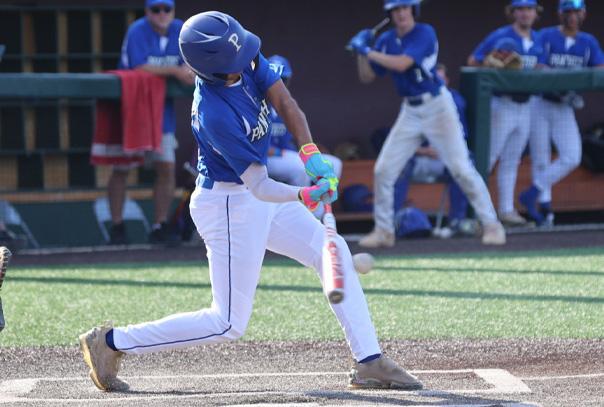
There’s a metaphysical feeling you get when you step onto a baseball diamond. It’s not just a field; it’s a distinct space. You hear it in the sharp pop of a fastball hitting the catcher’s mitt and the scrape of cleats on the dugout concrete. You feel it with the grip on the bat and on the rough, red seams of a ball in your hand. It is a special place. But in a high-pressure moment, it’s also a place of overwhelming volatility.
Picture a young athlete on the mound, the restless energy of the crowd in their ears, the opposing dugout roaring, the weight of the moment pressing down on them. Or the batter, standing alone in the box, heart pounding as his mind races. This sport, at its core, has too many variables to count and too many emotions to name. It is designed to test you.
I’ve coached for over 20 years, and I’ve learned my most important job isn’t just teaching mechanics or fundamentals. It’s handing my players a framework to navigate that turmoil.
For ball players, one way to find lasting success is to cultivate an anchor. We instill a personal, practiced ritual in our players that lets them slow the game down and find a sense of inner calm, even when everything seems to be spinning out of control.
That stabilizer isn’t built on game day. It’s forged in the quiet, repetitive, individualized work of practice. It’s about finding a routine. For a hitter, it might be as simple as hitting ground balls in the cage with a fungo bat, just to feel the bat path. Or perhaps we set a tee at the very top of the strike zone, focusing only on getting on top of the ball. Drills like these teach a hitter how to control what they can control. For a pitcher, it may be found in throwing progressions or drill work.
The goal of this work isn’t perfection; it’s self-awareness. It’s the “feel” versus “real” approach. That quiet work eventually becomes a visible foothold on the field. You see it in the batter’s consistent sequence as he taps the plate and adjusts his gloves, or the pitcher’s ritual of wiping the rubber with his cleat, finding a focal point, and taking a breath.
But the real work is happening inside. These actions trigger mental relaxation, the visualization of success and, most critically, the physical reset. This is the practiced cue, a tool that stops one mistake from snowballing into a second and third. That is where champions are made. And, as a result, it is how the sport becomes a training ground for life.
Visualize this—a young pitcher gives up a three-run home run in a big game. Even though the bases are empty now, he is still shaken. But he has his practice. He asks the umpire for another ball and walks to the back of the mound. He slams the ball into his glove twice, a physical cue that marks the end of the previous play. He takes that one deep breath he’s rehearsed, and finds himself again. He repeats his cue: “I got this!” He has brought himself back to the present moment.
Now, take that same athlete off the field. It’s Tuesday night, and he gets back a math test he studied hard for. It’s a C-. He feels that exact same rush of panic and negative self-talk. But he uses his reset. He gets up and takes the same deep breath he uses on the mound. Instantly, his ritual stops the emotional spiral. It shifts his focus from the variables to the controllable, and he emails his teacher to review the concepts he missed.
That is why we coach. We’re not just building better players; we are building champions for the community. When we teach a young person how to cope, we are giving them a skill for life. We are teaching them emotional regulation, resilience in a game of failure, and accountability against all odds.
In sports, the true win isn’t the final score. It’s seeing young adults, years later, using their foundation to navigate the turbulence of life, to breathe through the chaos and be present in the moment. The routine is the guide they carry forward, the tool that helps them build a life of purpose, long after the bright lights of the field have faded.