No player is perfect. No coach is perfect. No program or organization is perfect. We all have room for improvement. We can all grow within our sport and as human beings. Coaches can learn more, develop players better, organize and lead more efficient practices and prepare for and manage games better. Sometimes overlooked, we can also work to help our sport improve. Although not a complete list, I have pointed out a few areas where our sport and our development as coaches are doing well, and where we need to improve. We often think of player development, but coaches also need continuing development. Below are some “hits and misses” where we are getting it right, and where we also need to raise the bar…in my humble opinion. :contentReference[oaicite:0]{index=0}
HIT: A huge shout-out to American Baseball Coaches Association Executive Director Craig Keilitz and his very capable staff on putting together a phenomenal convention in Columbus, Ohio back in January. Craig and his staff invest a tremendous amount of energy and time in creating an incredible atmosphere for baseball coaches from all over the nation and around the world. The clinic speakers, the trade show, the committee meetings and the opportunities to network were outstanding. Having been around Craig and his staff for many years, these guys know how to lead and serve.
MISS: College baseball is in a better place than it’s ever been. For that, I’m thankful. But there is one thing we are missing. I’ve been preaching this for 45 years. We are missing an incredible opportunity for college baseball to become “the thing to do” in the late spring and early summer for fans in towns across America. Especially now that there are fewer minor league teams, college baseball should start the season no earlier than March 15. Many college campuses are in areas that remain very cold up into March. College baseball could be an exciting revenue producer for athletic departments in cities such as Ann Arbor, West Lafayette, Lincoln, Morgantown, and a multitude of college towns. College baseball could draw huge crowds in April, May and June. During this time of year, college basketball season is over, and sports fans are ready to be outdoors to enjoy America’s pastime. People love to go to the ballpark, but not when it’s 35 degrees. I will probably not see this in my lifetime, but for the players, fans and coaches I sure hope the “powers that be” wake up and create an even greater fan base.
HIT: The media coverage in college baseball continues to improve. A plethora of baseball games are televised. For baseball fans we now have choices. In the recent past, we were lucky to watch one game per week, after basketball season. Now, we can watch multiple games from February through the College World Series. It’s not just DI baseball, teams at all levels can live-stream games.
MISS: As I watch college, high school and travel teams play, (if I’m near the dugout and field) I hear profanity on a grand and obnoxious scale. When I played minor league baseball in the ’70s, it was prevalent in the locker rooms, dugouts and on the buses. Let’s prevent it from being prevalent in amateur sports.
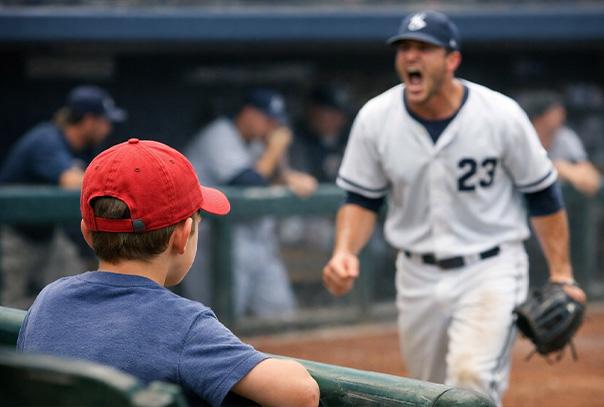
Picture this: An 11-year-old boy is watching college baseball on television or at the ballpark. The pitcher strikes out a hitter and while walking off the field, he’s screaming “F-YOU” loud enough for practically everyone on campus to hear.
Coaches, I know you love passion, energy, and competitiveness, but allowing this to go on reflects on you as a coach, your program and even the school you represent.
Side note: If pitchers still were allowed to hit, this would not happen as frequently. Competition is awesome. Leave nothing on the field as a competitor but leave the profanity off the field. Cameras zoom in and everyone reads lips from TV Land. Now the 11-year-old boy mimics his college baseball idol and, as a result, profanity is pervasive on youth league fields. I know that it’s a reflection of society. Even so, using profanity is never a good idea, especially within ear shot of children and the TV cameras. Coaches control the players’ schedules, their practice time, strength and conditioning, academics and many other things. Take a stand against the obscene language. Exude class and respect those who are watching. Screaming profanities at the opposition is not competitiveness, it’s just a lack of class. Class is a word we don’t hear much of these days. It’s hard to define but easy to recognize.
Coaches should lead by example. “In everything set them an example by doing what is good. In your teaching show integrity, seriousness and soundness of speech…” — Titus 2:7-8a
HIT: Physically, athletes are bigger, stronger, and better coached than ever before. But, coaches, never forget that you coach the entire player. The player’s character, in many cases, reflects your coaching style. Most coaches are doing a great job coaching the game. Let’s do a great job of coaching the player who plays the game. In some cases, you may be the only one who teaches a player how to treat people…teammates, coaches, and fans young and old. It all starts with the coach. John Maxwell has often said, “Everything rises and falls with leadership.”
“Do nothing out of selfish ambition or vain conceit. Rather, in humility value others above yourselves, not looking to your own interest but each of you to the interests of others.” — Philippians 2:3-4
Thankfully, college, high school, travel and youth baseball all have more “hits” than “misses.” Let’s all work hard to not only keep it that way, but to make it better.
If you found value in this article, you will enjoy my book, Coaching with Purpose.