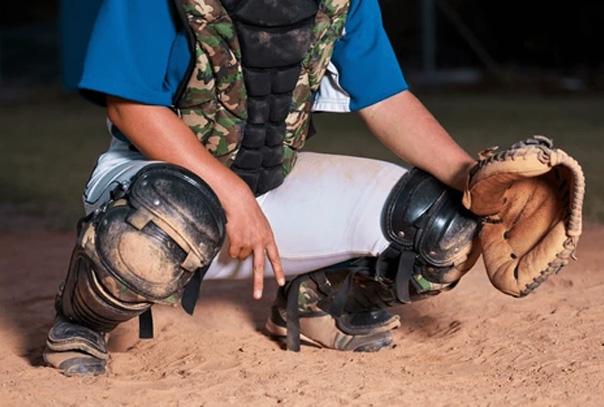
If you ask me, the use of signs in youth baseball should start when “kid pitch” begins. Even though most young pitchers only have one pitch—and we just hope it gets over the plate—the catcher should still get used to giving the sign for the pitch, and the pitcher needs to get used to reading it and nodding that they understand.
The next major point is when the runners can steal—there need to be offensive signs for stealing and a defensive set for bunt coverage, pickoffs, and first-and-third situations.
Who is responsible for watching the signs? Basically, anyone affected by the situation. Baserunners and batters are expected to look at whatever coach is giving offensive signs in between pitches. The entire defense (or infield, at least) should be watching for the catcher’s signs for bunt defense, first-and-thirds—even pitch selection or location if possible.
The complexity of signs increases as the athletes get older. When the athletes only have one pitch, then it’s okay for the catcher to put down one finger for every pitch. But as soon as the repertoire increases and the pitchers start to pick more often, the other team will catch on to the fact that the number one represents the fastball.
By 14, I liked my catchers to put down three signs for each pitch. The first sign was a distractor sign (this sign doesn’t mean anything), the second sign is either the location we’d like the pitch to or alerts the pitcher to a pickoff, and the final sign is the pitch to throw or the base to pick to.
As the coach, it’s also a good idea to have decoy signs and a “hot” sign. For example, ignore everything until the coach touches his ear. The sign after he touches his ear will tell you what to do.
Signs don’t have to be limited to hand signs. A coach can hide signs when giving feedback to players. For example, if we want the catcher to call the second pitch we might appear to be chewing out the catcher while in reality we’re telling them to call for the pitch. “Tommy, that’s two times you’ve done that! Two! Now fix it!” This was a way of telling the catcher to call the second pitch.
One of my favorites is when we have a runner on third and one on first. I want the runner on first to take a huge lead to tempt the defense into attempting a pickoff so that we can bring the runner on third in. To do this I’ll be “yelling” at the runner on first and standing there with my arms out like they made a mistake. This is the sign for that situation.
If the other team doesn’t attempt the pickoff, then we’ll have the baserunner on first take off early and steal second.
Signs have to be taught and practiced thoroughly. Teach them in every situation that it applies to during practice. The catchers need to practice the signs and the pitchers need to get used to reading them during batting practice, scrimmages, and situational practices.
For example, if we practice pickoffs to first base, then the catcher should call it so that the pitcher and infield are used to seeing it. Hitters and baserunners should also get used to reading signs during the batting cages, scrimmages, and situational practices.
Signs have certainly evolved, with wristbands and earpieces joining in on the fun, but regardless of your resources, they’re a vital aspect in most every level of baseball.
As the players have more options in the game (stealing bases, varied pitches, pickoff moves, etc.), the use of signs will increase and become more complicated. This will also become even more important as baseball players advance through the sport.
It’s important to teach this and practice it thoroughly to ensure that everyone is on the same page.