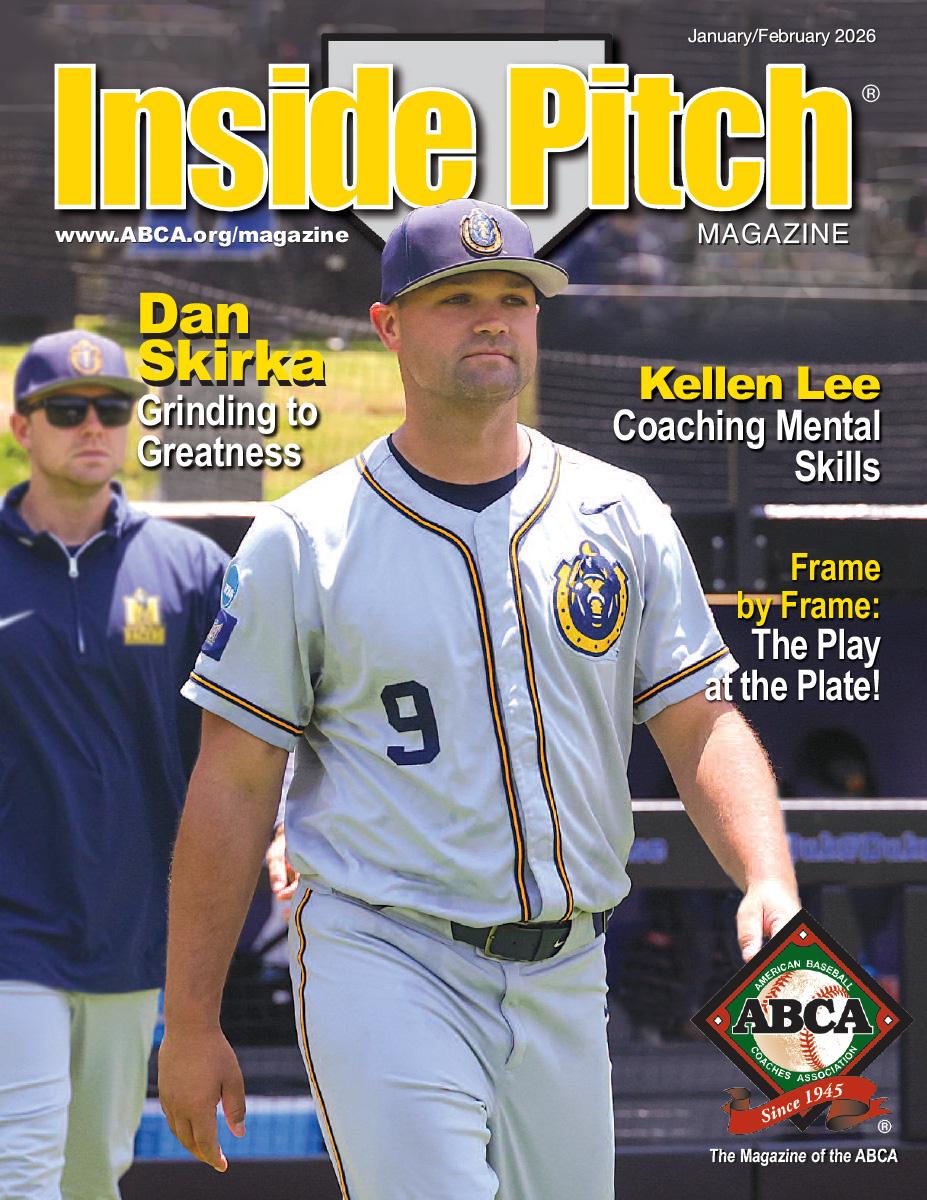
Dan Skirka begins his eighth season as head coach at Murray State in 2026, fresh off a banner campaign where he led the Racers to their first-ever College World Series appearance. Murray also won a school-record 44 games and captured their first Missouri Valley Championship in 2025, their fifth consecutive season with 30-plus wins. He came to the Racers in 2018 after previously serving as an assistant there (from 2009-14) and at Walters State Community College, where he served as the program’s recruiting coordinator from 2015-2018. With Skirka on staff, the Senators went 208-48 and finished the 2018 season with a 60-8 record and a runner-up finish in the NJCAA World Series.
Skirka’s first two stops were at Ouachita Baptist, working under former Murray State player Chris Moddelmog, and Grand Rapids Community College, where his team advanced to the 2008 NJCAA World Series. As a player, Skirka hit an even .400 as a senior at Grand Valley State, earning Rawlings/ABCA All-Region First-Team accolades. He began his collegiate career at Kellogg Community College, where he was named the school’s Male Scholar-Athlete of the Year in 2005. He and his wife, Kelsey, have one son, Keegan.
Inside Pitch: Simple question with a complex answer: how do you handle recruiting multi-sport athletes?
Dan Skirka: I love multi-sport athletes. My message to players and parents would be to play every sport you want, especially while you still can. Compete, learn those different athletic moves, get accustomed to different coaches in another arena. You’ll be better in the long run for it. We’ve seen that firsthand here at Murray, with some northern kids that just hadn’t played as much baseball until they got here. When they do get down here, they’re able to play more in the fall, we’re outside more in the spring, and a lot of them go out in the summer, so of course they make a jump.
IP: You were a basketball player in high school as well…
DS: Growing up in Michigan, we didn’t have much of an option. There weren’t really any indoor facilities that were around us, so it was a lot harder to train for baseball in the winter. As a result, I played a lot of basketball. We could get in the gym basically from Halloween until March when the weather started getting better. But I’d shovel the driveway to play basketball at my house with my brother, it was another chance to compete and play sports, and to get away from baseball a little bit, which can be healthy.
IP: Do you feel like high school basketball players are at a disadvantage because their seasons often run into March?
DS: One hundred percent. I was always at my best in the summer. That was when you finally got to play consistently. You get to take batting practice outside on a regular basis, plus, you’re in the dirt all the time taking ground balls as an infielder. You just can’t simulate that in a gym, a batting cage, or even with the springtime weather in certain places.
With that said, we would never hesitate to recruit a basketball player, just like we would never hesitate to recruit a kid from farther up north. You see the same things in terms of the jump I mentioned with multi-sport athletes, especially basketball players. They also tend to put on more weight when they get into college and become more physical.
IP: You’re also a fan of recruiting junior college players, right?
DS: When you’re recruiting at a place like Murray State, you have to find guys that love baseball. We may not have the best resources in the country—we’re in Murray, Kentucky, we get all that—but the guys that love baseball want to come here, develop, and be surrounded by other baseball rats like themselves.
A lot of times, those are JUCO guys, because they’ve been through that grind with the crazy bus trips, the games where nobody’s in the stands, where it’s just you and your teammates. They play long doubleheaders and still want more. When you can get enough of those guys, you can do something special.
IP: How did you handle adversity early in your career?
DS: Having a strong faith, for sure. The big man upstairs has a plan, and you just have to trust it. It’s His timing and our job is just to prepare.
IP: How do you bake that philosophy into your practices?
DS: Our time is finite, so I am meticulous about what we’re doing and making sure guys have the optimal time to do it. Preparation is everything. There are days we push, and days we rest. That balance has helped us play deep into the postseason.
IP: What are some other ways you develop your team?
DS: We lift together, use the classroom heavily, show film, have book clubs, hold people accountable, and celebrate growth. I love winning baseball games, but I love developing young men a whole lot more. We use baseball to teach life lessons, because we’re preparing them to be better sons, husbands, fathers, and leaders later in life.