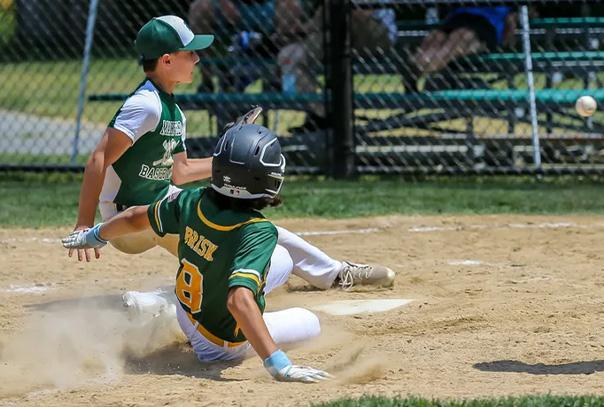
It’s late in a close game. The bases are loaded, but we’re 0-2 in the count against the batter. The pitcher throws his pitch, it hits the dirt and gets past the catcher. The catcher pops up but cannot find the ball. As he looks around for it, the pitcher is frozen on the mound. All the runners move, the one on third comes in and scores. The catcher finally finds the ball (it was in between his feet), but he is so flustered that he overthrows the ball to third base and everyone else comes in to score too.
This is a situation that happens in youth baseball. Unpacking this, the defense made a number of mistakes. First, the catcher might have been able to do a better job of reading the pitch and being ready to block it. Second, nobody communicated the location of the ball to the catcher, who clearly could not find it. Third, the catcher made a poor decision throwing the ball to third, and this was compounded by a bad throw.
In baseball, we are going to have passed balls and wild pitches. Sometimes that’s on the catcher, sometimes it is the pitcher’s fault, and sometimes it’s just chance. What we can control is what happens next.
First, the catcher needs to attempt to block the ball. Now, that’s not always possible and the ball will sometimes get past the catcher. There are a lot of great drills and practice time spent on the catcher getting up and chasing down the ball.
When the ball gets past the catcher, the pitcher is supposed to run up to home plate and cover home. Again, a lot of practice time is spent on this situation. What is lacking, however, is communication between the pitcher and the catcher.
The catcher knows that the ball got past him but is unable to see where it went, so he must spend precious seconds looking for the ball himself—likely through his mask if he is still wearing it, which isn’t easy. On the other hand, the pitcher can see where the ball went, so he should be communicating this to the catcher as he runs up to cover home plate.
This communication needs to be simple, short, and something that cannot be misinterpreted. From the catcher’s perspective, the ball can be behind the plate on his right side (first base side), behind the plate on his left side (third base side), straight behind the plate (second base side), or under the catcher.
To keep it simple, I have the pitcher yell the location based upon the bases as he runs to cover home. He’ll yell, “One! One!” to indicate it is on the first base side. “Two! Two!” for behind the plate. “Three! Three!” for the third base side. Finally, he’ll yell “Down! Down!” for under the catcher.
This communication approach is not something that can be implemented for the first time in a game—everyone will be so confused that they won’t be able to function. All teams do some form of a passed ball/wild pitch drill where the pitcher must practice running up and covering home; we just need to add the communication piece.
As the coach, I like standing well behind the catcher with a baseball in my hand. The pitcher will simulate the pitch. I will then drop the baseball in a random spot well behind home plate. The pitcher will have to run up communicating the location, the catcher will have to pop up and get the ball, and then we’ll practice the toss to the pitcher and the out at home.
Note that this is also a drill that can be done in batting cages. It’s very important to tell pitchers to point at the ball as well. Lots of people yell when a ball gets by the catcher, so they must learn to pick up the communication from the pitcher aside from just listening for their voice, which they may not be able to hear anyway.
Mistakes stemming from a passed ball or wild pitch are a great way to kill the morale of a team and ruin the rest of the game. Practice and communication can go a long way toward minimizing mistakes in these situations.