Being fortunate enough to play and coach for the better part of the last 40 years has allowed me to experience the transformation baseball has undergone firsthand. I’m here to share my thoughts on this movement, in hopes of educating current and future coaches, players, and their families on the choices they are likely to be in a position to make as they choose their path.
My personal experience with development during my playing days allowed me to keep my natural and athletic movements from a personal standpoint. So, I know I’m not alone when I say I’m concerned with the growing number of arm injuries we have been seeing over the last decade and beyond. Players and coaches using “measurement as motivation” and chasing standalone throwing velocity has me questioning whether they are actually getting better or not. I am seeing the game become more robotic instead of staying fundamentally athletic in our movements. Hitting exit velo benchmarks and radar gun numbers can be fun to achieve and “PR” with, but it must not be the primary way we teach and evaluate players. We are all seeing better velocity numbers across the board, but the “fundamentals first” way of playing the game has really been sacrificed.
Chasing velocity has created more holes in a player’s game that could be filled by getting back to maintaining athleticism and becoming more complete as a player. Training players with more consistency yields more consistent on-field results, at least in my experience.
Trust me, I do believe in change and evolution in the game, but we must be implementing the right changes that do not put players’ health at harm, something we are clearly doing, seemingly at will. Injuries will always happen, but if we can minimize them to the best of our abilities, I feel coaches have done a big part of their job.
Here are some things we can revisit to get back to development and athleticism:
Shut it down: There must be a mandatory shut-down period with throwing. That period should be paired with a renewed commitment to the weight room. For my high school players this was typically in August/September. We would shut our players down throwing-wise and incorporate a regimented lifting program. This time allowed for heavy lifting and focus on post-lift stretching, a routine that has likely faded throughout the “dog days” of summer ball.
Stretch it out: Let’s get back to long toss! We seem to have grown away from long toss programs recently. I am no doctor, but I firmly believe the more the arm is stretched out and used in an intelligent manner, the better it will respond. For me, restricted muscles and loss of range of motion in joint areas likely lead to many arm injuries.
Throughout my career, it was not uncommon for us to have several players make big gains with their arm conditioning, health, and strength. I believe this was a direct result of long toss.
Rep it out: Create athletic movements in the athlete while you are developing them. Coaches have moved to talking too much about technology and information instead of letting their players be drilled and “rep it out” until they figure things out for themselves. At times, our new tech and advanced info can take players’ athleticism and instincts out of their game.
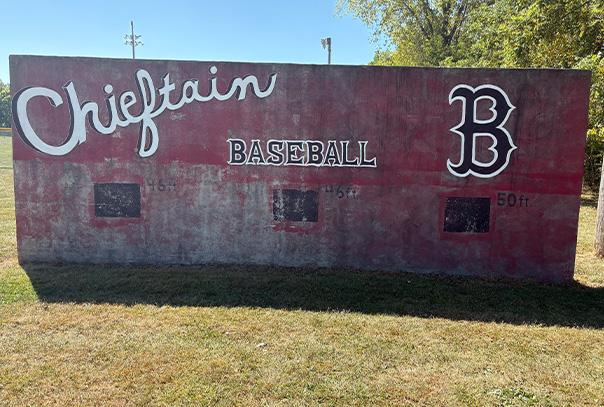
Get back to the wall! Introduced way back by legendary scout Tony Lucadello*, wall drills allow players to create and maintain athleticism in their throwing motions (among other benefits). It promotes throwing from multiple positions, which creates different arm angles and slots. Anyone who is teaching one way to throw a ball is making players robotic in their movements. I still see many MLB spring training sites with a wall, but it’s usually being peppered with plyo balls or sitting by its lonesome. I built one at Bellefontaine High School, and I feel it contributed in a big way to our player development and overall success.
*Tony Lucadello (1912-1989) was an Ohio-based scout who worked for the Chicago Cubs and the Philadelphia Phillies, signing over 50 players who made it to the Major Leagues, including Hall of Famers Ferguson Jenkins and Mike Schmidt. Lucadello’s scouting fundamentals along with ‘The Lucadello Plan’ are still followed by many teams today.
Teach freedom in hitting approaches: Every hitter has a different skill set and should be taught accordingly. We must encourage more contact in response to pitchers chasing velocity, as they are likely to walk more batters, so we must capitalize offensively. Just like with throwing programs, I feel we are cloning too many hitters—there should be different approaches for different types of players.
Velocity enhancement programs must have credibility: They also need to be closely monitored by everyone involved. Justify the movements in the program and follow proper protocols/mechanics. You get one arm with only so many bullets. A proper warm up is essential, as is an optimal long toss program. Remember, you restrict your muscles when trying to achieve numbers, so it is vital to stretch those same muscles back out with training, stretching and other recovery programs.
Don’t make everything so calculated: Practice planning, scouting reports and sign systems are all useful, of course, but they each take away a little bit of flexibility from within the game. Flexibility leads to freedom, which is where you see players learn how to use their instincts.
Go play! Find a way to play more sandlot games, and more catch in the backyard. Look at some of your players. I bet they play with creativity and freedom. Remember—don’t just chase velo and scholarships, let your approach to how you train and how you play guide your path.
Ease up on the ‘gas’: Not every throw you make has to be maximum effort. Arms need to be paced and taken care of throughout the year. Coaches need to know when their players are enrolled in any kind of velocity programs. Sometimes we start them too early in terms of age, or fail to allow for proper rest.
Coach for development and athleticism: Longevity in the game should be the coaches’ number one directive in player development. Research different ways that may work for your team. Don’t just incorporate the first thing you see or “rubber stamp” the way you learned it when you played. Evolve. Go to coaching clinics. Talk to well-respected people in the game. Find mentors who are willing to help you.
Remember, neglect in player development and care hurts the dreams of the future for the player involved. So let’s do our homework, coaches. Players are counting on us to understand the assignment!