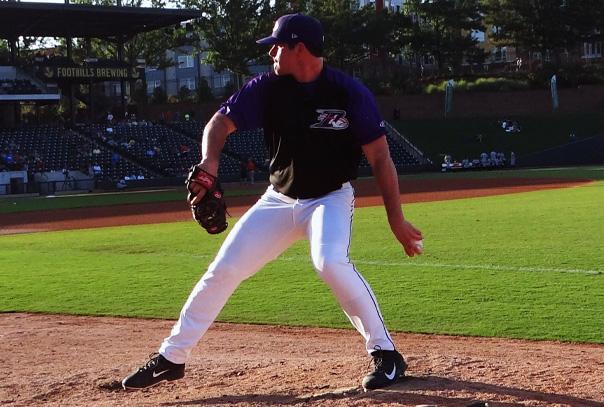
I had a client who was a left-handed reliever in Double-A. He had a quality fastball, a sharp curveball and solid command, and he was dominating hitters at that level, evidenced by just about any stat you’d want to measure. But his organization wanted him to throw more changeups; his fastball-curveball combo was good enough to dominate Double-A, but his club wanted him to develop a third pitch for when he got to the big leagues. Part of the mental dilemma he faced was that it was his Rule 5 year, so he was hoping to be added to the 40-man roster. And as you might imagine, he wasn’t as good with his changeup—since he hardly threw it and didn’t have much comfort or confidence in it yet—how could he?
Naturally, he was worried that if he started throwing a change in games, he would ruin the great year he (and his numbers) were having. He was plenty aware enough to know that having a changeup could make him an effective big leaguer, but overusing it could result in compromised results over the second half of the season, which could ultimately cost him a roster spot.
Every coach, program, and organization must face the question of whether to focus on “win now,” or developing players who will grow into winners in the future. This is the same at every level. Would you jeopardize a JV game by putting a freshman into a high-leverage situation? Does putting him into that situation give him the experience he will need to become more reliable come clutch time? Is it worth risking a loss for the team in exchange for the reward of individual development?
How would you make those decisions? How do you build development into your program?
Professional baseball focuses so much on development that the lessons for learning to win can get blurred at times. I’ve seen coaches “lose the clubhouse” because they didn’t communicate enough of an emphasis on winning.
In amateur baseball, you probably need to win on some level in order to keep your job. But developing talent is a way to attract more talent, too. Here are some thoughts on how to balance and integrate winning and development in your program:
Shaping Behaviors
You don’t have to throw 3-2 changeups with the bases loaded in the bottom of the ninth to work on throwing your changeup. With my client, we committed to start with throwing a change early in the count to right-handed hitters; start the hitter with a first-pitch change or get ahead 0-1 and then throw it. This was a way to get comfortable throwing it in a game without worrying about getting swing and miss later in the count. His curveball had always been his out pitch, so he could continue to use that when he got to two strikes.
He saw quickly that hitters were fooled by the change, which had been a distant third offering before. That gave him confidence to use it later in the count. Shaping like this refers to a behavior modification technique where you start with smaller, manageable steps on your way to a more complex behavior.
You probably use shaping in your coaching, even if you didn’t know that’s what it was called! You can use it with roster decisions and playing time as well. As you look at college programs, you see less experienced players getting innings and ABs during midweek games; this is an example of shaping. Think about the skills you want your players to execute and give them plenty of chances in lower leverage situations to improve them.
Eventually, you’ll have to pick your spots and get them into higher leverage moments if you want to continue that progress. This is where I see many programs becoming limited. If you want to win consistently, you need to push your own comfort zone for giving players opportunities. The more you provide these opportunities, the more you show players you trust them and in return, the more they will play loose and like themselves.
Winning as a Tool
One place I’ve seen player development systems fail is focusing too much on development and not enough on winning. There are specific behaviors that lead to winning. When coaches publish their “way,” it’s often these behaviors that are emphasized (and by the way, it’s not as much of a “secret sauce” as you’d think).
It’s not the behaviors that are unique, it’s the way you connect with your people, the way you build trust and confidence, the way you teach your players to think and act. You can actually shape these behaviors, too. If you want your pitchers to throw inside more to establish the plate, teach them to do it and reinforce their success when they do! If you want hitters to be more aggressive in the zone or grind out two-strike ABs, you value these behaviors and reinforce them, even if they don’t hit homers and doubles very often in those scenarios. Shutdown innings, closing out a team, staying aggressive even after a big inning... there are many examples of key parts of winning that you can break down and teach as development points. When you teach these points, your players get better at skills that lead to more wins.
Experience
When it comes down to it, there is no better way to develop players than experience. Simply put, they need to play in games to test their training. I’ve heard many strategies about making practice as intense as a game, but I don’t believe that’s as easy to do as it sounds. There is something that “counts” about a game that every player feels—umpires, the scoreboard, the crowd, their stats—in a way that they don’t feel despite your turning up the intensity in practice or intrasquads. Consider the most optimal ways to manage your lineups so you can give as many of your players as much real-game experience as possible.
Your challenge is to find ways to bring along developing players later in games (and in closer games) so they turn into the winning players you need to make your program successful.
Long story short, my client moved up to Triple-A later that season, throwing more and more changeups along the way. He was indeed added to the 40-man and he’s in the big leagues now. If you want to be better than you are now as a player, as a coach, as a program, be willing to “‘throw more changeups” in your own approach to the game!
Geoff Miller has spent the better part of two decades working in Major League Baseball for multiple organizations. His mental skills training series and commentary are available through Optimize Mind Performance, an app that links athletes with some of the most renowned mental skills coaches from around the world. For more information, visit www.optimizemindperformance.com.