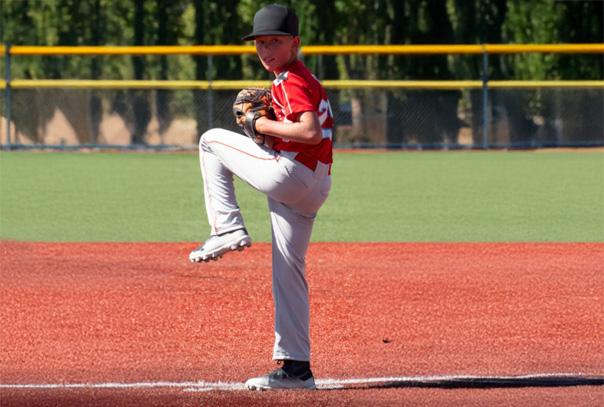
Calling pitches and pickoffs in youth baseball is an area where I’m often not on the same page as other coaches. How many times have we been to a game where the opposing team’s coach is sitting on his bucket outside the dugout screaming at his pitcher because the pitcher didn’t read the coach’s signs and threw the wrong pitch? For me—with youth baseball—this approach keeps prospective pitchers and catchers from learning the game and developing. This is because they are not having to think about the nuances of the game, which can negatively impact their development when it comes to playing at higher levels of baseball.
Calling pitches and pickoffs is about the long-term development of the players, not how smart the coach is. This article is going to cover how and why we let our catchers call the pitches in youth baseball. The value to this is that the catchers must really learn the game, the pitchers and catchers have to learn to work together and communicate, and the entire team will increase its baseball IQ from this approach.
Have a Philosophy and Teach It
Allowing youth baseball players to randomly pick pitches and call them is going to be a disaster. Pitchers and catchers need to be taught how to do this, and this teaching is going to have to be an ongoing process that is practiced regularly. As a coach, have a philosophy about this and this should guide how this is done. Here’s an example:
Pitch Selection Principles
On the first pitch of an at-bat, we are typically looking to attack with our best pitch (ideally a fastball). 1-2 or 0-2 counts: off-speed or other specialty pitch. 3-0 or 3-1 counts we must challenge the zone down the middle with a fastball. This may result in hard contact or a hit, but at least we are giving our defense a chance to make a play and not giving away a free base.
With runners in scoring positions, we need to avoid the big hit that is pulled to the gap in the outfield, so we may stay on the corners or use the inside part of the plate so certain batters don’t get extended.
If the batter can’t catch up to your fastball, don’t overthink it: stick with the heater! If the batter is swinging before the pitch gets to the plate or pulling the ball foul, we need to move to slower off-speed pitches or pitch away off the plate. If you’re facing a player or team who is crowding the plate, we choose to pitch inside, which is something we have to learn eventually anyways, even if it comes at the cost of a hit-by-pitch or two. When the batter is far off the plate, we stay away, and we have similar approaches if the batter is up (towards the pitcher, probably looking for off-speed, so we throw fastballs) and back (towards the catcher, we are ready to go with off-speed if they are able to catch up to the fastball) in the box. Remind your catchers to move up and back in their catcher’s box to help with receiving and so they don’t get injured with a catcher interference call.
Pickoff Principles
We have similar philosophies with our pickoff system, though it’s simpler in many ways. We don’t typically pick behind runners in scoring position, for example. And if we hit a batter and there is nobody on third base, then we want the very next pitch to be a pickoff. By having a philosophy and communicating it, it ensures everyone is on the same page.
Adjust to the Level of the Player
10U is going to be different from 14U, and travel baseball is going to be different from recreational baseball. This approach should be adjusted to the level of baseball that is being coached. At 10U, we hope the pitchers can get the ball over the plate and they may only have one pitch. At 14U travel baseball, we (hopefully) have a lot more to work with. This means that a realistic assessment needs to be made of where the level of skill is and the approach to calling pitches and pickoffs needs to be adjusted accordingly.
Allow the Players to Make Mistakes
If youth catchers are calling pitches and picks, they are going to make mistakes. This is the best way that they are going to learn. Once the mistake is made, talk to them about what happened. While the mistake may cost you in the moment, hopefully your players will learn and prevent the same error from happening again.
This Has to be Practiced
If this approach is implemented for the first time in a game, then it is likely going to fail spectacularly. This needs to be practiced for all parties (catchers, pitchers, and coaches) to be comfortable and it needs to be taught to all parties as the situations unfold. This is best practiced in the bullpen where pitchers and catchers are trying to learn to work together and in any and all scrimmages.
Below is an example of how this could work in a batting cage session when they are pitching against a batter, with the coach teaching all parties:
Count 0-0. First pitch is the pitcher’s best pitch. The batter steps away from the pitch.
Count 0-1. Coach to catcher: “What did the batter just do?” Catcher: “He stepped back.” Coach: “What does that mean?” Catcher: “He’s afraid of the ball so we pitch inside.” Second pitch is inside, batter steps back while swinging and misses.
Count 0-2. Coach to catcher: “We’re way ahead in the count, now what can we do?” Catcher: “Call an off-speed pitch.”
Another Example
Count 0-0. First pitch is the pitcher’s best pitch. The batter connects for a solid hit. Coach: “Now we have a runner on first base. The runner is taking a big lead.” The catcher gives the pickoff sign and the pitcher simulates a pickoff.
Count 0-0, runner on first base. First pitch is the pitcher’s best pitch, the batter again connects. Coach: “Solid hit, that was a double. Now we have a runner on second and third base. We want to avoid the big hit, what do we do?” Catcher, “Pitch inside.”
I’m a huge fan of working both sides of the ball at the same time in practice. While these conversations are going on with the pitchers and catchers, the batter can also be taught how to react to things. For example, “Where was that pitch?” Batter: “Inside.” Coach: “Why?” “Because I stepped back.” Coach, “How can we fix that?” Batter: “Stay in place, get ready for an inside pitch.”
Teaching players the “whys” behind pitch and pick calls increases their knowledge of the game which makes them much more valuable players for a team—both now and in the future. This is going to result in mistakes, but mistakes are how we learn best. This approach also allows the coach to focus on the bigger picture of the game.