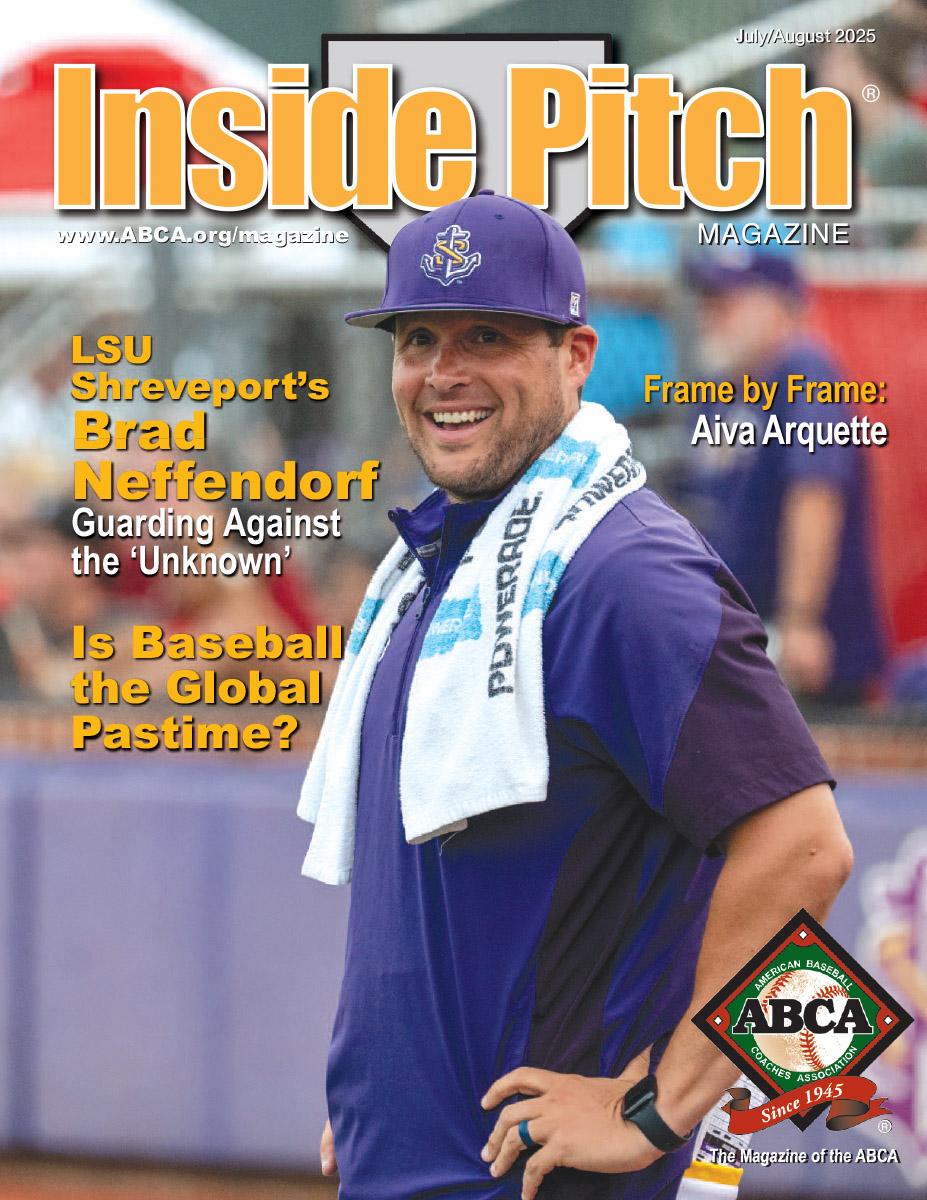
Brad Neffendorf has transformed LSU Shreveport into one of the most dominant programs in all of college baseball since taking over as head coach in 2020. He’s led the Pilots to a 270–49 overall record, four straight RRAC regular season titles, two NAIA World Series appearances, and the program’s first-ever NAIA National Championship in 2025 with a historic 59–0 undefeated season.
Under Neffendorf, LSUS has broken dozens of program and national records, produced 14 All-Americans and 23 professional signees. He’s also earned numerous coaching honors, including RRAC Coach of the Year (2022, 2023, 2025), Louisiana Sports Writers Association College Coach of the Year, and the 2025 ABCA-ATEC NAIA Coach of the Year, and the 2025 Skip Bertman Coach of the Year.
A native of Oregon, Neffendorf previously won a national title as the pitching coach at Tennessee Wesleyan and has held assistant roles at Southern Illinois and Campbellsville. He holds a Master’s in organizational leadership and resides in Bossier City with his wife, Meghan, and their two children.
Inside Pitch: You had just taken a job as a NCAA Division I assistant when you got the call from Shreveport…
BN: Everything was fine at Southern Illinois when I heard about this job. It was just myself and Lance [Rhodes] in the office when I got that call, and I kind of laughed, honestly. They flew me down, I got here, and I was still like, “Man, I don’t know.” It was winter break, nobody was around. But the timing of it all really worked out perfectly. My wife is the head athletic trainer here now, our kids are settled in with friends and they love it here. So from a quality-of-life standpoint, it’s been great.
IP: And you’ve got an even more interesting story about how you got into coaching?
BN: I pitched for two years at a junior college, had a rotator cuff injury that required surgery, and a month after that, I was on my way to the surgeon’s office for a follow-up. I was sitting at a stoplight when a guy fell asleep at the wheel and hit me from behind, jamming my arm—sling and all—straight into the dashboard, which blew up my labrum, and that was pretty much that. Maybe two months later, I got a call about the freshman team coaching job at Summit High School in Bend, Oregon. I had always wanted to coach, and I wasn’t really doing anything else. I was there for a year and then moved back to the Portland area, where things took off.
We only had Legion ball there, so I threw together all the seniors who had nowhere else to play, and we ended up with a pretty good team. Ultimately, along with the help of some others, we put together one of the first real “select” teams in Oregon history. We traveled everywhere and had a lot of success, and it put me around the right people at the right time, like Matt Dorey, who is now the Vice President of Player Personnel with the Chicago Cubs. He hired me to go to Mount Hood Community College with him. I ended up getting there, taking a scouting job, and finishing my degree. Along that path, I met Chris Lewis, who is now the head coach at Union Commonwealth University. He was my assistant for two summers, and one day he told me he was looking into a job at Campbellsville University in Kentucky. I said, “Where? What are you talking about?” A year later, they had a job open for pitching and recruiting, and sure enough, I ended up at Campbellsville right there with him.
It’s crazy how it’s all intertwined. Jake McKinley, who’s now the head coach at Nevada-Reno, was in that role at Campbellsville before Chris, so we have that connection as well.
IP: What are some things you did with that Oregon bunch that you're doing now?
BN: It’s very comparable. The difference now is obviously recruiting. I used the whole year to recruit that team for the summer, and we had eight draft picks, which was ridiculous. What was amazing about that group, and something that’s helped me with this job right now, is something I stole from Pat Casey. He taught me that you don’t necessarily have to have the best players—even though they help, obviously—you’re trying to form the best team.
There are coaches at every level who are very successful, but they’re more consumed with putting together a roster instead of a team, and that can be a recipe for disaster in my opinion. Conversely, it’s amazing how fast the right team can become one unit and figure out how to play together.
IP: You mentioned your quality of life at an NAIA school. How do you organize your practices knowing you have fewer time restrictions?
BN: We run all of our small group work in the mornings, so we’re done by noon. When we get out there for our team segment in the afternoon, we’re doing some sort of group work—like a heavy defensive day or an offensive session where we’re doing something live. But we like to play fast and go fast. It’s structured, but it’s an in-your-face type of workout—an hour and a half or so—and we’re out. We’re out of there by 3:30 at the latest, so these guys can stay on top of their academics, enjoy their lives, and not feel like baseball stuff is consuming them all the time. The game is what we do, it’s not who we are—and I know everybody says that—but I think the formula of our class schedules allows us to really hit on the development side here. The results speak for themselves.
IP: What else stands out about your practices?
BN: Energy on defense. I love a loud offense, I love hitting, but when it comes to practice, I’m all over these defenders. I’m not saying we’re doing anything revolutionary or cutting-edge, we’re just all over them with our expectations on the defensive side. We’re going to make some errors, but they’ve got to have thick skin, because it takes time. The infielders don’t get a break. We throw every ground ball variation we can think of at them, and it’s amplified. For example, when we get an out with no one on, we fire the ball around as quickly as we can and try to get the ball back to the pitcher before the batter has the weight off the bat. That’s how we practice. It’s one of the first things I do with these guys when we get them here in the fall—fire it around. Sprint back to your position. Show the outfielders how many outs. In your face, as fast as we can, back to your spot, get your pre-pitch timed up right every time. The newcomers are gasping for air early on, but they catch up fast.
I don’t like standard on-field BP. It’s boring and I don’t like standing around, so we try to change some things up, make sure there’s a lot going on. Now, we do have slower-paced days during the season when you’re trying to manage how much or how little they need that day so we’re fresh going into the game, but we want to move fast. And it might get ugly sometimes, but so does the game.
IP: What’s it like recruiting players to a school that just went 59-0?
BN: The big thing in the recruiting process is letting these players know that I don’t care how good they are, and the game doesn’t either when it comes to creating a team and building that all over again. I don’t want anybody in this program who fears our expectations. I want guys who want to be a part of that, because that’s the only way we’re going to keep developing this program.
Everything in your program has to be a fit. All the coaches, the players you recruit, the walk-ons you take, the support staff, there has to be clear communication on the standards and the expectations. And I don’t care if they’re from Antarctica; look at our roster, it’s all over the place, but it all lines up. It’s kind of like cutting grass—seeing that progress when those lines come together.
IP: Team-building has never been more of a challenge...what are your keys for that?
BN: You’re typically only going to be as good as your returners are, but everything starts in that locker room—showing the new guys how we do it, what we do, what we don’t do. We’re going to have a few one-year guys with today’s system, and they might be on their fourth school in as many years, so they don’t know which way is right or wrong by the time they get to us. You’ve got to have the “why” ready for those guys. This isn’t a one-way street, but the standards and expectations aren’t changing.
I brought each of the guys in for who they are, and we’re going to develop them based on that. But when it comes to how we do things as a team, they don’t have an option. I’m not a dictator, but we always have that “why” ready.
IP: What’s the fall like at your place?
BN: The fall is so big for us. We get eight weeks, so from a development standpoint combined with the weather we get, we’re on the field a lot more than most. I think that’s why we’ve typically started out really fast and really well. This past year was no different—we kept getting better, starting with day one in the fall. As a coach, your job anywhere is to take advantage of the resources you have and try to put something together that can be successful and execute at a high level. Another huge reason why we did what we did this year was the ability to keep our assistants around, which will get harder each year, and that’s part of it. We are getting better and better support from a resources standpoint, which is great. But keeping it all together? That’s the challenge.
IP: Were you making efforts to distract the players from the winning streak? Any superstition(s) involved?
BN: Obviously, every coach has their routines and their way of doing things, but I did wear the same pair of shoes every single day of the year. But we had our reminders for the players, just the standard stuff: don’t give in. Ignore the B.S. Keep doing what we’re doing. Get better every day. These guys had such a focus on getting back to the World Series and earning a chance to play for the title, but they never talked about it. That was the most unique thing.
IP: No one talked about it at all?
BN: We probably addressed it a little bit after we won the 38th game, which was one record, and the 41st, which was the NAIA record, but it wasn’t some big speech. I get into it and right away you see their faces, just looking at us like, “We’re not done.” They did an unbelievable job staying focused and managing the distractions and outside noise this year.
You’re trying to manage and prevent distractions. There’s so much more going on in their lives than whatever you’re getting on them for on the field. And let’s get real—we are all trying to prepare them for what’s going to happen on the field, but we need to prepare these kids for life as well— in a short amount of time.
The only time I saw a glimpse of something different was the first game of the World Series. I probably said something like “set the tone,” which wasn’t consistent with our messaging. It leaned more toward arrogance—like, “We’ve got to show everybody all over again.” We adjusted that quickly, “No we don’t. Just keep being who you are.” And we settled in after that.
IP: What else is involved with “being who you are” as a team? Is that how you’ll remember your ’25 team?
BN: The team in that other dugout can’t beat you, but you can beat you. We’re always guarding against that unknown, and in baseball, the unknown is everything. Someone else might come out and execute on the mound. A bad hop or call won’t go your way in a big moment. That’s real.
We don’t take a day off from that mindset, or from how we approach the game. That was our theme this year: guard against the unknown. And even though we ran the table, it’s still hard. And it was hard saying goodbye after that season, maybe harder, honestly, because we passed every test, and now there are no more to take. But that’s the great thing about coaching. We’ve developed relationships that will stand the test of time. These players know we care. They know we trust them, and they know we’re trying to take the standards and expectations we had all season and apply them to our lives. That’s a real test.