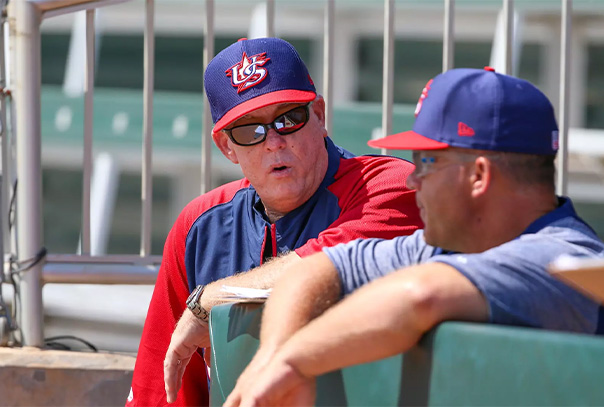
I have seen a disturbing trend lately of too many head coaches in the dugout. Every successful head coach sets the direction of their organization and is a leader. It seems that in our current culture, everyone wants to lead—or thinks they should be leading—but no one wants to assist.
According to the Oxford Dictionary, an assistant is “someone who helps or supports somebody.”
So, the question is: does no one want to assist, or have we not empowered young coaches to become good assistants? The answer lies somewhere between, or perhaps both.
It is easy to point the finger or blame young coaches as “entitled.” We can say, rightfully so, that they get all their information from social media, and with no counterbalance, they are experts, but really, it is the fault of the senior coaches. The responsibilities of senior coaches do not end on the field with the players or the administrative demands. Senior coaches must help mold, empower and develop good assistants.
I was an assistant baseball coach for 17 years before I became a head coach. In that time, I worked for one boss, Kevin Cooney. I would not be where I am today without Coach Cooney extending his time to mentor me. I was young and thought I knew a lot, but I really wasn’t that bright. I have often mentioned that the greatest gift he gave me was the freedom to make mistakes. Now that I am entering my 18th year as a head coach, I want to stress what mentorship can do for young coaches and the game by developing good assistants.
First and foremost, we must get the hire correct. I know that is not as easy as I make it out to be but take your time. Make sure your process is good. A big part of the process is self-awareness. You must understand the type of person and coach you want to hire. Be very honest with who you are and how you work. I am not saying to be afraid of a candidate with a strong personality or one who has strong beliefs, but please vet all the possibilities that you can coexist with. Make sure the job details are defined and expectations are clearly understood.
Now that the hire is made, make sure the organization’s onboarding is very clean. Young coaches need to be able to hit the ground running with their strengths with no personal hiccups. The job needs to be defined entirely on and off the field, including a clear picture of the resources they will have to accomplish your agreed-upon goals successfully. This will include help, budget restrictions, time restrictions, and facilities, among others.
As the head coach, your job is to coach the coaches and the team. You must make time to coach your assistants.
1. Empower them to be the “head coach” of their position group. Before they become “the head coach,” approve and pave the way for them to go about their work. You are not micro-managing. You are getting a sense of the overall structure of what is going on. Keep an eye out, make suggestions behind the scenes, and avoid correcting in front of the players. Public correction tends to undermine a young coach’s ability to coach the players/position group. Collaborate behind the scenes and then allow your assistant to present the information.
2. Let them make mistakes. We understand that “errors” happen and believe they are teaching tools with the players. They can be a valuable tool for the growth of young coaches as well. If you think there is a better way to coach a player, bring it up. If they don’t like it, let them go with what they believe as long as it does not risk a player’s health or safety to support the assistant’s growth. Collaborating on procedures can help as a teaching tool.
3. Don’t be afraid to “lose an argument” to an assistant. When I say argument, I mean discussion. Allow them to explain their reasons why they want something done or someone to play. Ensure their logic and reasoning are sound, and then decide in their favor. Assistants work hard and have to have a good relationship with the players. Allowing an assistant to get one of “their guys” in a game goes a long way with his group. You are helping him gain trust.
4. Give them time in front of the team. Allow young assistants to present information to the whole team. We do a weekly team “chalk talk.” Each assistant must present a different topic to the team. It has been invaluable. Presentations give assistants access to the guys and, in some cases, guys they usually do not coach. It builds respect for the entire staff, not just the head coach or position coach.
5. Have conversations with young coaches about their futures. Ask what they want to accomplish. Where do they want to get to? This can be tough, but don’t be afraid to allow them to express what they want their career to look like. This can also help you direct their energy into helping the players and program in additional ways. For example, if they say they want to be a head coach, give them budget responsibility or a fundraising event. Expose them to what you do daily.
6. Communicate. It is one word, and everyone thinks they can communicate, but make sure to let them know how they are doing and provide good and bad feedback.
To have a good program, you need good assistant coaches. Good assistants are coached just like good players, so make sure you spend time with the staff. I hope this helps. Good luck to your entire staff.